
Home · Business · Sep 10 archive
European Central Bank Set to Hike Rates Amid Inflation Concerns
Confirmed
In Short: The European Central Bank is expected to raise interest rates for the second time since August 2023, according to market consensus.
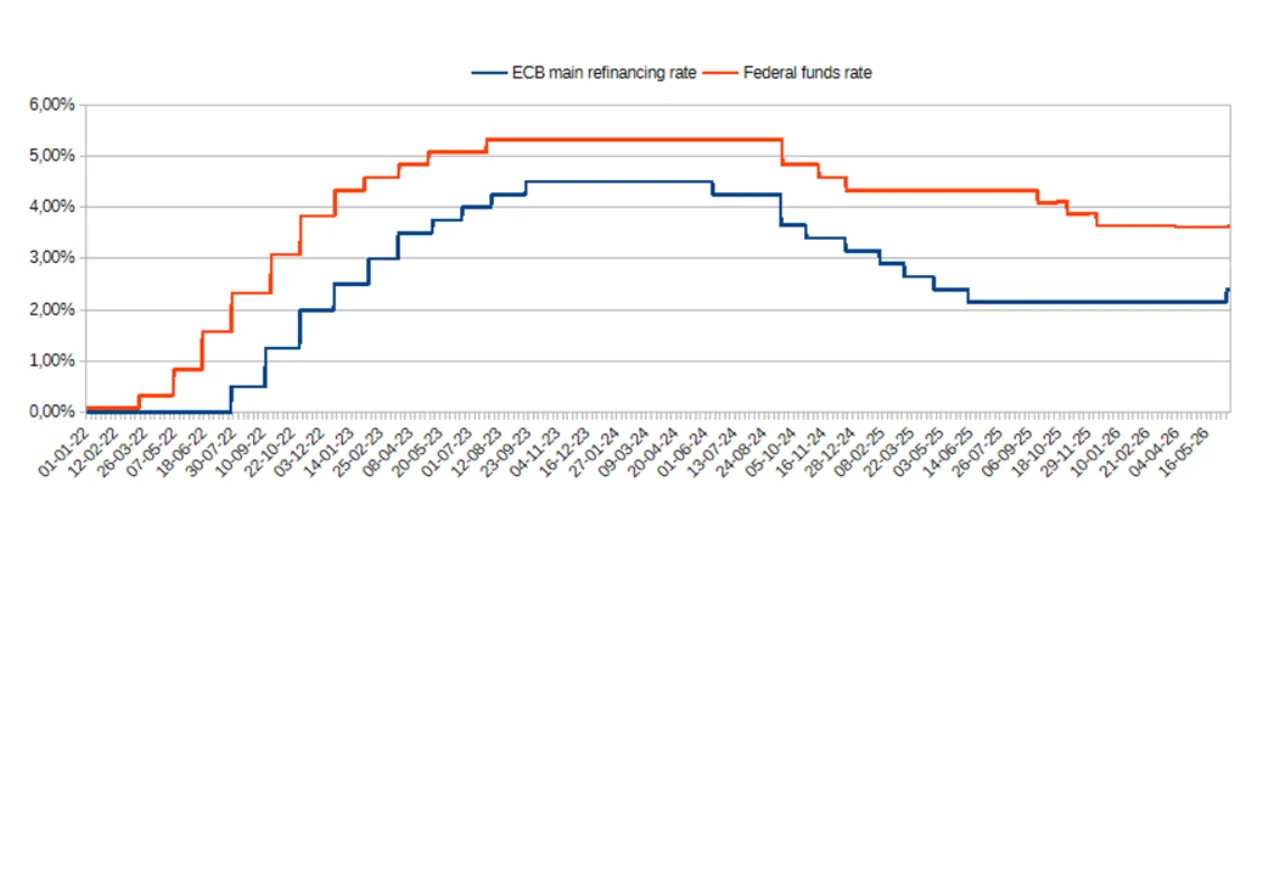
The European Central Bank (ECB) is set to raise interest rates for the second time since August 2023, according to market consensus, as it aims to quell inflation pressures.
Deutsche Bank believes another ECB rate hike is now 'more or less a done deal,' while Natixis and Crédit Agricole both expect July inflation to remain stubbornly elevated due to renewed energy price pressures.
Despite the absence of formal guidance, Deutsche Bank notes that several policymakers were already debating whether to raise rates immediately in July, reinforcing its view that the deposit rate will rise to 2.50% in September.
Natixis also expects inflation to remain uncomfortably high, forecasting headline inflation unchanged at 2.8% in July and core inflation steady at 2.4%.
According to Natixis, renewed geopolitical tensions involving Iran have reversed the temporary easing in energy costs seen earlier this summer, making it harder for inflation to continue falling.
The Euro has weakened against the US Dollar over the past two weeks but recovered ground against Sterling, reflecting shifting expectations for ECB and Bank of England policy.
If the ECB does hike rates, it could potentially hint at higher inflation figures in the coming months, as higher producer costs usually roll down to consumers, pushing inflation figures to the upside.
Energy prices are expected to remain elevated, with a risk to re-accelerate into year-end, according to Natixis, which notes that several policymakers were already debating a rate hike in July.
What's confirmed
- The European Central Bank (ECB) is set to raise interest rates for the second time since August 2023, according to market consensus, as it aims to quell inflation pressures.
- Deutsche Bank believes another ECB rate hike is now 'more or less a done deal,' while Natixis and Crédit Agricole both expect July inflation to remain stubbornly elevated due to renewed energy price pressures.
- Despite the absence of formal guidance, Deutsche Bank notes that several policymakers were already debating whether to raise rates immediately in July, reinforcing its view that the deposit rate will rise to 2.50% in September.
- Natixis also expects inflation to remain uncomfortably high, forecasting headline inflation unchanged at 2.8% in July and core inflation steady at 2.4%.
- According to Natixis, renewed geopolitical tensions involving Iran have reversed the temporary easing in energy costs seen earlier this summer, making it harder for inflation to continue falling.
- The Euro has weakened against the US Dollar over the past two weeks but recovered ground against Sterling, reflecting shifting expectations for ECB and Bank of England policy.
- If the ECB does hike rates, it could potentially hint at higher inflation figures in the coming months, as higher producer costs usually roll down to consumers, pushing inflation figures to the upside.
- Energy prices are expected to remain elevated, with a risk to re-accelerate into year-end, according to Natixis, which notes that several policymakers were already debating a rate hike in July.
What's still developing
- Solana-based Decentralized Exchange is witnessing a surge in network activity and growth amid new token launches.
- Meanwhile, rising September Fed rate-hike bets and escalating US-Iran tensions help ease US Dollar selling pressure, offering some support to the currency pair ahead of US inflation figures.
- Our currency coverage draws on live market data, official economic releases and published bank research.
- The Euro traded mixed on Monday as investors looked ahead to next week's Eurozone inflation data, with economists increasingly expecting the European Central Bank to resume raising interest rates in September.
- "Some governors were already asking themselves whether or not to hike in July." While Deutsche Bank continues to forecast 2.50% as the peak in the current tightening cycle, it warns the risks have shifted towards an additional increase.