
Home · Faith · Sep 1 archive
Archbishop Fabre: Labor Day Calls for Building Communion Amid AI Challenges
Developing
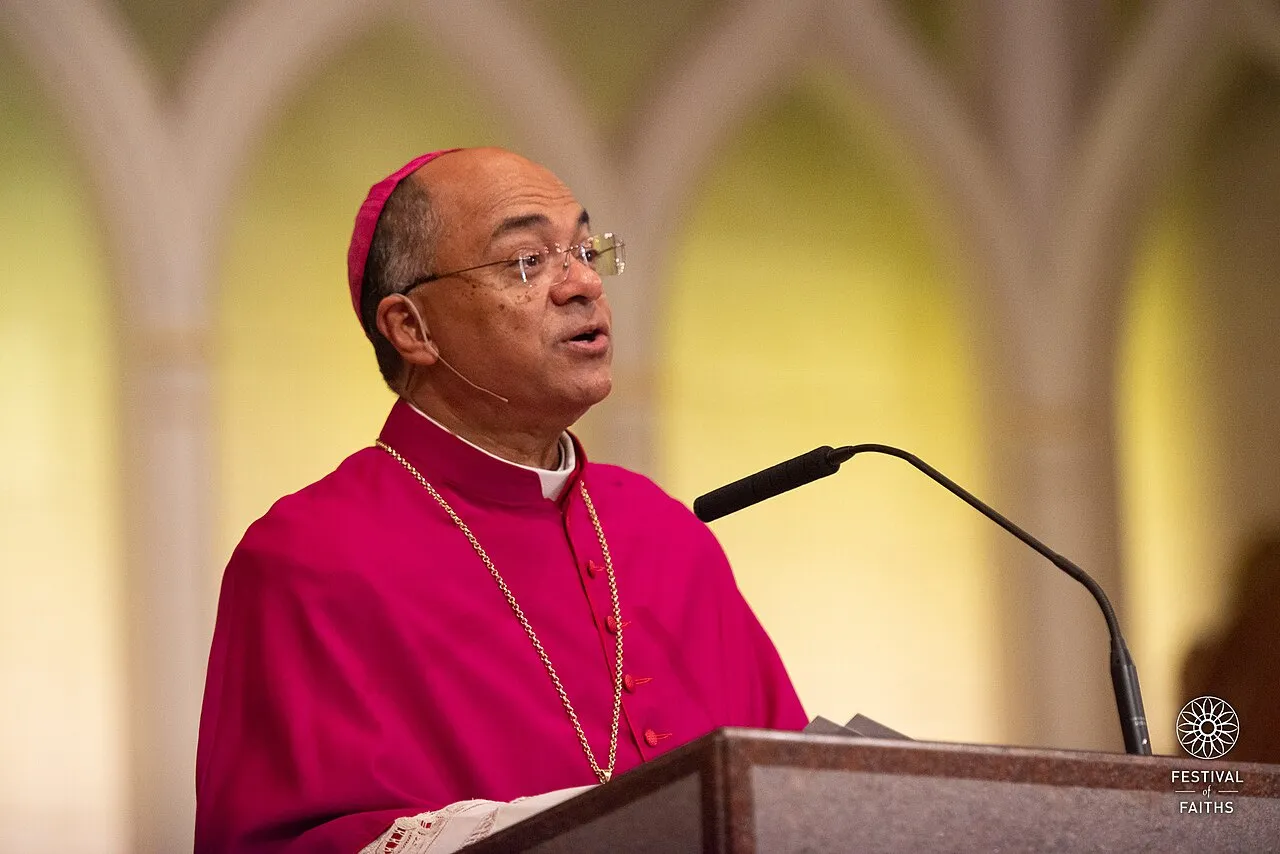
(OSV News) — This year’s Sept. 7 observance of Labor Day underscores Pope Leo XIV’s call to be “builders of communion” while safeguarding human dignity, as artificial intelligence “reshapes our economy and our work,” said Archbishop Shelton J.
That partnership — spanning “the Church, government, labor unions, civil society groups, corporations, and others” — will help ensure that “innovation and development is for the benefit of all, not just a few, and that each person can contribute to the Kingdom of God through their work,” said Archbishop Fabre.
First established in New York City in 1882, the annual holiday — which developed from labor activist movements of the late 19th century — “is an opportunity to celebrate workers and honor the dignity of work,” said Archbishop Fabre.
The encyclical, which affirmed longstanding papal teachings on labor and the common good, warns that “although AI presents new opportunities, it also risks normalizing a vision that is anti-human,” said Archbishop Fabre.
While “traditional economic indicators tell us the economy is growing,” hiring itself “has slowed, especially for unemployed workers,” and “unemployment remains high for Black workers,” said Archbishop Fabre, citing a June analysis from the Washington-based Joint Center for Political and Economic Studies.
Pointing to research from Washington University, the archbishop said that “roughly one-quarter of the labor force are low-wage workers,” with 72% percent lacking stable jobs. “We must listen to the experiences of workers, families, young people, and communities of color as they struggle to find stability,” said Archbishop Fabre.
“Much of the teaching of this document remains relevant for our shared project in the United States,” said Archbishop Fabre. “And yet, we have been here before,” he said, noting that Pope Leo XIII’s 1891 encyclical “ Rerum Novarum ,” written in response to the Industrial Revolution, has helped the Church to bring “the sacredness of the human person to the questions of work and labor for these last 135 years.
Among the challenges are the need “to ensure just development of AI systems, with worker participation, transparency and accountability; to protect good jobs, offer retraining where needed, and correct the power imbalances that are exacerbated by technology,” he said.
What's confirmed
What's still developing
- (OSV News) — This year’s Sept. 7 observance of Labor Day underscores Pope Leo XIV’s call to be “builders of communion” while safeguarding human dignity, as artificial intelligence “reshapes our economy and our work,”…
- First established in New York City in 1882, the annual holiday — which developed from labor activist movements of the late 19th century — “is an opportunity to celebrate workers and honor the dignity of work,” said…
- While “traditional economic indicators tell us the economy is growing,” hiring itself “has slowed, especially for unemployed workers,” and “unemployment remains high for Black workers,” said Archbishop Fabre, citing…
- Pointing to research from Washington University, the archbishop said that “roughly one-quarter of the labor force are low-wage workers,” with 72% percent lacking stable jobs.
- In addition, the Urban Institute’s WorkRise initiative has found that people of color make up more than half of the low-wage workforce, the archbishop said.
- “We must listen to the experiences of workers, families, young people, and communities of color as they struggle to find stability,” said Archbishop Fabre.
- The encyclical, which affirmed longstanding papal teachings on labor and the common good, warns that “although AI presents new opportunities, it also risks normalizing a vision that is anti-human,” said Archbishop Fabre.
- “Pope Leo expressly acknowledges the great risks of AI for workers: de-skilling, surveillance, rigid and repetitive tasks, reduced agency and creativity, unemployment, job insecurity, concentrated power, and…
Sources
- OSV Newslink