
Home · World · Aug 25 archive
Supreme Court allows Trump's mail-in ballot order to go into effect
Confirmed
What we know
The Supreme Court concluded Monday that the states’ lawsuit was premature because the executive order itself had not yet inflicted the concrete injury needed for federal courts to intervene. The Supreme Court's decision did not weigh in on the legality of Trump's executive order, which has so far not directly affected eligible absentee voters' option to cast ballots by mail. The Supreme Court's order does not preclude the states from filing lawsuits that challenge the policies finalized and ultimately put in place by the administration in response to Mr. Trump's directive. The conservative-led high court on Monday paused a lower court's ruling that had blocked key parts of an executive order that Trump issued back in March. But with its Monday order, the Supreme Court has now granted emergency requests from the administration and 12 Republican-led states to pause the judge's June ruling in 23 states and Washington, D.C., while not weighing in on the legality of Trump's order.
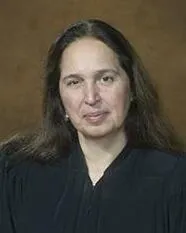
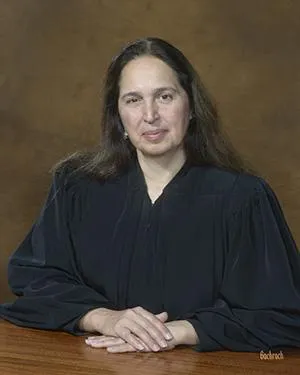
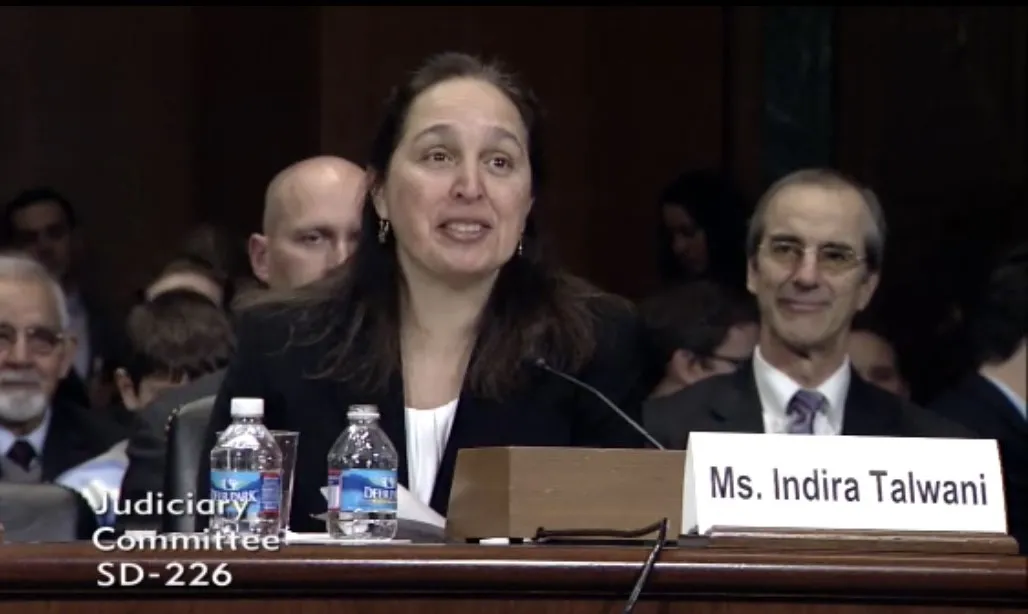
In a separate case involving voting-rights groups, U.S. District Judge Indira Talwani issued an order earlier this month that prevents the Trump administration from implementing the executive order's provisions that direct the Postal Service to develop new procedures for mail ballots for the upcoming elections. Trump's order calls for the Department of Homeland Security to develop state lists of adult U.S. citizens and for the Postal Service to obtain lists of eligible mail voters from states. NPR: "That is especially true because implementation efforts for any USPS rule or DHS policy will need to begin well before November—indeed, as soon as early to mid-August—to be effective for the 2026 election, particularly given that absentee and mail-in voting begin (in some States) several weeks prior to Election Day," Sauer noted. Worthynews: USPS said it would not implement the new standards for the 2026 election unless the government obtains relief from the outstanding court injunctions. NPR: As part of a separate but related lawsuit, the Postal Service is blocked from following Trump's directives under a nationwide ruling released Aug. 11 by U.S. District Judge Indira Talwani in Boston.
Trump issued Executive Order 14399 on March 31, directing federal agencies to establish additional safeguards for federal elections. CBS News: As part of those efforts, the president signed in March an executive order that he said aims to protect the integrity of U.S. elections in part by ensuring noncitizens are not casting ballots. "These are commonsense measures that protect the security of mail-in ballots and ensure only Americans are electing American leaders," White House spokeswoman Lauren Bis said in a statement. NPR: All election officials would also be required to have certain barcodes on their mail ballot envelopes. NPR: A dozen Republican-led states have already appealed that ruling.
After the high court's decision, New York State Attorney General Letitia James, a Democrat, said the states challenging Trump's order are now exploring legal options. But the Order itself does not harm the States, so the District Court lacked jurisdiction to bar the Government from trying to implement it. NPR: The administration has previously acknowledged the shrinking window of opportunity for the administration to implement Trump's order for this year's midterms. "On that score, time will tell," the court noted.
“The Order itself does not harm the States,” the Court said, adding that its ruling does not mean measures ultimately adopted by the administration will necessarily be lawful. States would not be required to use those lists. NPR: Trump — who himself voted by mail as recently as this year in Florida — has said he issued this order to stop illegal voting by non-U.S. citizens in federal elections, which research has found to be infinitesimally rare. Worthynews: Instead, they said the administration must be permitted to develop them before courts determine whether any finished policy violates federal law. NPR: John Sauer noted that there may not be enough time to resolve the legal challenges through the appeals process with the courts.
Background
The Supreme Court of the United States (SCOTUS) is the highest court in the federal judiciary of the United States. It has ultimate appellate jurisdiction over all U.S. federal court cases, and over state court cases that turn on questions of U.S. constitutional or federal law.Wikipedia — Supreme Court of the United States (CC BY-SA)
The United States Postal Service is an independent agency of the executive branch of the United States federal government responsible for providing postal service in the United States, its insular areas and associated states. It is one of a few government agencies explicitly authorized by the Constitution of the United States.Wikipedia — United States Postal Service (CC BY-SA)
What's confirmed
- by Emmitt Barry , Worthy News Washington D.C. Bureau Chief WASHINGTON ( Worthy News ) – The U.S. Supreme Court on Monday handed President Donald Trump a significant victory in his effort to tighten federal election…
- It was an earlier decision by Talwani, in June, that the Supreme Court ruled on Monday.
- The high court's unsigned order Monday said that its "disposition of this application does not mean that any measure taken by the Government to implement the Order will necessarily be lawful.
- The court's three liberal justices, however, dissented from the court's decision.
- After the high court's decision, New York State Attorney General Letitia James, a Democrat, said the states challenging Trump's order are now exploring legal options.
- Trump's order calls for the Department of Homeland Security to develop state lists of adult U.S. citizens and for the Postal Service to obtain lists of eligible mail voters from states.
- The high court said in its unsigned decision that the states filed their lawsuit too soon.
- But the Order itself does not harm the States, so the District Court lacked jurisdiction to bar the Government from trying to implement it.
What's still developing
- NPR: The lower court's ruling applied to 23 mainly Democratic-led states, plus Washington, D.C., that sued the administration.
- NPR: As part of a separate but related lawsuit, the Postal Service is blocked from following Trump's directives under a nationwide ruling released Aug. 11 by U.S. District Judge Indira Talwani in Boston.
- NPR: "On that score, time will tell," the court noted.
- NPR: USPS, which is independent of a president's administration, also has no legal authority to control mail-in voting, the judge found.
- NPR: The administration has previously acknowledged the shrinking window of opportunity for the administration to implement Trump's order for this year's midterms.
- NPR: "That is especially true because implementation efforts for any USPS rule or DHS policy will need to begin well before November—indeed, as soon as early to mid-August—to be effective for the 2026 election,…
- Worthynews: A separate nationwide injunction issued earlier this month continues to block implementation of key U.S. Postal Service requirements, meaning the legal battle could return to the courts before ballots begin moving…
- Worthynews: Under the proposed system, ballots that failed to comply with the required procedures could be returned rather than processed through the Postal Service.
Sources
- NBC News — source text fetched for this pass link
- NPR — source text fetched for this pass link
- CBS News — source text fetched for this pass link
- NBC News — source text fetched for this pass link
- Wikipedia — background on Supreme Court of the United States link
- Wikipedia — background on United States Postal Service link