
Home · Science
NASA: magnetosphere “saturation” in solar superstorms may be a statistical illusion
Confirmed
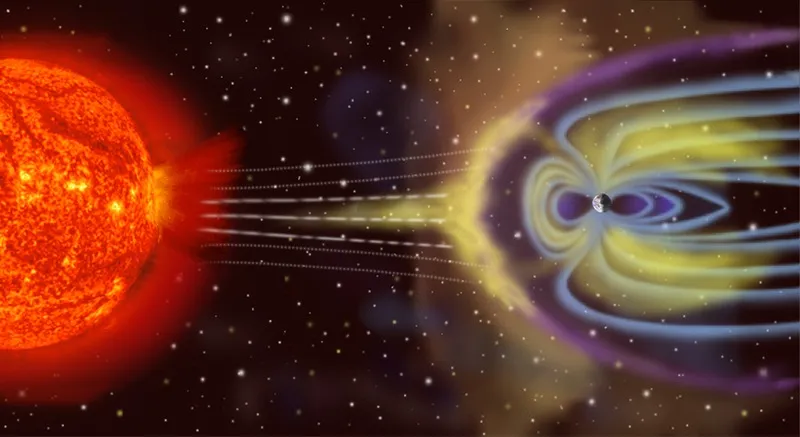
What we know
A Nature paper led by NASA Goddard researchers argues that the long-observed “saturation” of Earth’s geomagnetic response in severe solar storms may be an artifact of how scientists measure the solar wind, not a physical safety valve in the magnetosphere.
Most wind strength estimates come from L1 monitors (WIND, ACE, DSCOVR) about 1.5 million km sunward of Earth. Extreme readings there paired with milder ground responses can bend the curve via regression-to-the-mean bias, the authors say. After calibration, the linear storm-to-response relationship continues — implying 1-in-1,000-year events could spike power grids and satellites harder than saturation models assumed.
What's confirmed
- Nature (Aug. 2026): Nithin Sivadas et al., “Regression to the mean can explain saturation of geomagnetic storms” (DOI 10.1038/s41586-026-10757-4); NASA Goddard co-authors.
- phys.org / Universe Today summary (Aug. 22): L1 distance, heteroskedastic noise, and regression bias framed as explanation for apparent PCI saturation.
- Operational takeaway in secondary coverage: grid and satellite operators should plan for larger electrical spikes if a severe storm hits.
What's still developing
- How widely space-weather forecasting centers will revise extreme-event planning envelopes after peer review and replication.
- Whether machine-learning models trained on L1 inputs systematically absorb the same statistical illusion.