
Home · Science
July 2026 was warmest July on record for global ocean surface, Copernicus says
Confirmed
What we know
European ocean-climate monitors report that July 2026 was the warmest July on record for the global extra-polar ocean surface, with Copernicus Climate Change Service citing about 20.96°C average SST (60°S–60°N) and Mercator Ocean’s GLO12 analysis about 21.00±0.11°C — both above the prior July 2023 mark.
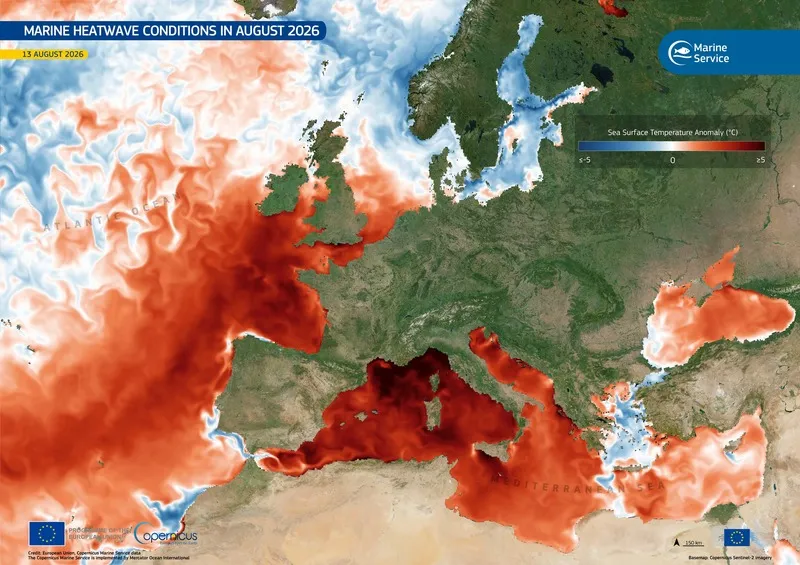
Nature and agency briefs link the heat to long-term human-caused warming plus a strengthening Pacific El Niño. Marine heatwave extent was extreme: Mercator says intense-or-higher MHW conditions touched about 27% of the global ocean for at least one day in July, with the Mediterranean logging its warmest July (~27.07°C).
What's confirmed
- Copernicus C3S / Nature news: July extra-polar SST 20.96°C, above July 2023; June also a monthly record; all-time SST record from March 2024 nearly within reach.
- Mercator Ocean International July 2026 bulletin: global ocean 21.00±0.11°C warmest July; Mediterranean 27.07±0.27°C warmest July; wide MHW footprint.
- Scientists quoted in Nature warn residual heat after El Niño onset makes an all-time SST record this year likely (“just a case of when,” Samantha Burgess).
What's still developing
- Timing of any all-time global SST record later in 2026 as El Niño evolves.
- Regional coral-reef and fisheries impacts still being tallied for July–August.