
Home · Politics · Aug 6 archive
Supreme Court Allows Trump's White House Ballroom to Continue
Confirmed
In Short: The U.S. Supreme Court has halted lower court rulings that would have temporarily blocked the construction of a new 90,000-square-foot ballroom at the White House, allowing the project to proceed indefinitely.
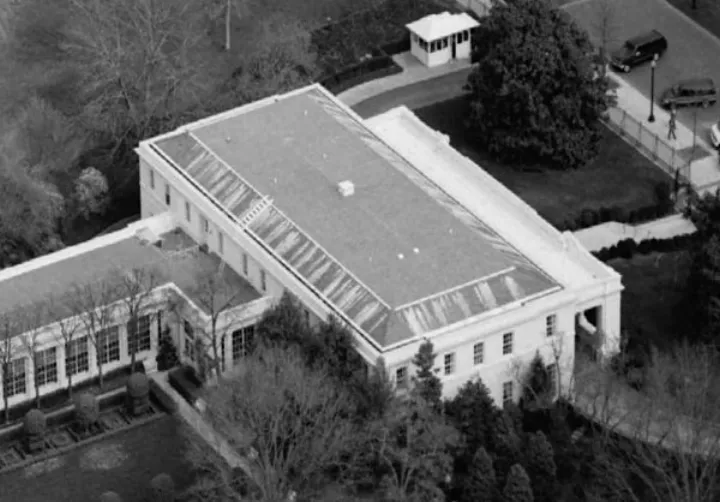
In a 5-4 decision, the Supreme Court today allowed construction of the $400 million White House ballroom project to proceed indefinitely, despite legal challenges from the National Trust for Historic Preservation, which argued that President Trump lacked unilateral authority to proceed without congressional approval.
The court's unsigned eight-page ruling found that the trust likely lacks standing to bring the case but did not decide whether the president actually has the authority to build the ballroom without Congress.
The administration told the court that construction was 65% complete as of August 24, with a 250-person crew working 20 hours a day, seven days a week, and that any significant pause in construction would harm national security facilities being built underground.
In its unsigned opinion, the court ruled that lower court judges 'likely exceeded' their authority by blocking the ballroom, citing declarations from top administration officials who said the project was necessary for national security and government operations.
Background
The White House is the official residence and workplace of the president of the United States. Located at 1600 Pennsylvania Avenue NW in Washington, D.C., it has served as the residence of every U.S. president since John Adams in 1800 when the national capital was moved from Philadelphia.
In most legal jurisdictions, a supreme court, also known as a court of last resort, apex court, high court of appeal, and court of final appeal, is the highest court within the hierarchy of courts. Broadly speaking, the decisions of a supreme court are binding on all other courts in a nation and are not subject to further review by any other court.
What's confirmed
What's still developing
- This just in: The U.S. Supreme Court today allowed construction of Trump's $400 million White House ballroom project to proceed indefinitely while legal challenges continue.
- In a 5–4 decision, the court blocked lower-court rulings that would have paused the aboveground portion of the project ( Archinect reported on August 7 ).
- The challenge, brought by the National Trust for Historic Preservation, argued that Trump lacked unilateral authority to proceed without congressional approval.
- The court’s unsigned eight-page ruling found that the trust likely lacks standing to bring the case but stopped short of deciding whether the president actually has the authority to build the ballroom without Congress.
- The administration told the court that construction was 65% complete as of August 24, with a 250-person crew working 20 hours a day, seven days a week.
- In a 5-4 decision, the Supreme Court halted lower court rulings that would have temporarily blocked the construction of a new 90,000-square-foot ballroom where the East Wing once stood.
- The high court said in an unsigned opinion that the National Trust for Historic Preservation, which filed a lawsuit to block the project, likely did not have the legal right to sue.
- Roberts had temporarily allowed work on the ballroom to continue earlier this month, giving the Supreme Court more time to weigh the Trump administration's bid for emergency relief.